
How Tracking Headache Can Help Improve Your Care

Keeping a headache diary can be one of the most helpful tools for understanding your symptoms and improving your care.
A diary allows you to track patterns over time, better communicate with your healthcare provider, and evaluate whether treatments are working.
But it doesn’t need to be complicated—or perfect—to be effective.
Why Keep a Headache Diary?
A headache diary can help you:
- Understand how often headache and migraine attacks occur and how they affect your daily life
- Share clear, accurate information with your healthcare provider
- Track whether treatments are working over time
When Is a Headache Diary Most Helpful?
Keeping a diary can be especially useful:
- Before your first appointment with a healthcare provider
- When starting or changing a treatment
- If your symptoms change
- When tracking patterns over time
Start Simple
You don’t need to track everything at once.
Start with just a few key details:
- Did you have a headache?
- How long did it last?
- Were you able to function normally?
As tracking becomes easier, you can gradually add more details like symptoms, medications, and possible triggers.
What to Include in Your Diary
Once you’re comfortable, you can begin tracking additional details such as:
- Frequency (how often headaches occur)
- Duration (how long they last)
- Location and type of pain (throbbing, pressure, burning)
- Associated symptoms (nausea, light sensitivity, sound sensitivity)
- Medications used and how well they worked
- Possible triggers (sleep changes, stress, food, weather)
You don’t need to track everything at once—add details gradually in a way that works for you.
Your Diary Can Evolve Over Time
Your diary should grow with you.
- Getting started: Focus on frequency, duration, and function
- As you continue: Add symptoms and treatment response
- If helpful: Begin exploring possible triggers
Tracking too many things at once can feel overwhelming. It’s okay to take this step by step.
Final Thoughts
A headache diary doesn’t need to be complicated to be effective.
Start small, stay consistent, and use it in a way that supports your daily life. Over time, even simple tracking can provide meaningful insights that help guide your care.
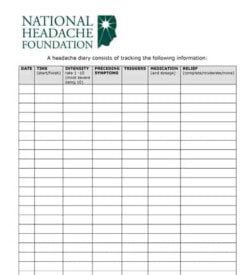
Download a Headache Diary Template
You can use our printable headache diary to get started:
Prefer a Digital Option?
Check out one of these great apps.
"*" indicates required fields