
STRENGTH IN EVERY STORY™
Elizabeth’s Story, September 2025
As told by: Claire Moacdieh
Diagnosis received: Migraine with aura, chronic intractable migraine with and without aura
Symptoms: Facial pain, fatigue, allodynia, eye pain, neck pain, nausea, brain fog, sensitivity to light, sensitivity to sound, sensitivity to smells
Elizabeth, a mom and healthcare worker, has struggled with headache attacks for most of her life. She experienced symptoms throughout high school and after pregnancy. In 2001, she was officially diagnosed with migraine with aura and later became chronic intractable migraine with and without aura.
While living with migraine, she also lives with other comorbidities such as hypertension, atypical facial pain, weight gain, and tachycardia. Particularly, migraine has affected her working experience and her role as a mother. She has relied on several medicated and non-medicated treatments to manage her symptoms.
A Long Road
Elizabeth began experiencing her first attacks when she was in junior high and high school while living in Little Rock, AR, but she didn’t know that it was migraine until she was officially diagnosed in 2001, right around the birth of her first child. In high school, she was a cheerleader. “I always missed school. … I used to have to cheer with a banging headache and then stop and drink a Sprite® and get some acetaminophen and sit there.” During this time, she experienced headache attacks once or twice a month, which negatively impacted her social life.
She had to miss parties because of her pain. She described “[I was] lying down in the backseat of the car with my friends because my head was hurting, so I couldn’t even go.” She also experienced a bad headache during the senior banquet and could not enjoy the evening. As her symptoms progressed after high school, she lost a lot of her friends, because of the stigma associated with headache disorders. Her pain grew worse in 2000, when she was pregnant with her first child.
When she was diagnosed in 2001, she was surprised. She didn’t know what migraine was until her diagnosis. Her health care providers (HCP) prescribed various opioids* to help with the pain. “I was always on those, looking like a zombie because my head was hurting all the time.” She was on these pain medications for a long time.
She moved to Fort Worth, TX, in 2010 with her 10-year-old son and boyfriend for a new start. She went to a new neurologist, and he stated she was taking too many opioids and medications that cause rebound headache, so her new HCP took her off all headache medications for 3 months and put her on amitriptyline.
She stated, “My boyfriend, now ex-husband, at the time thought I was having seizures, but I figured it was withdrawal symptoms. I was having jerks, sweats, and tremors; I couldn’t eat. I was getting depressed because I was in pain and couldn’t take [anything].”
Elizabeth continued, “[I] would just take [opioids] because of the pain, but I guess my body was addicted, but I didn’t want to take [them] because [they were] making me feel weird.” These medications impacted her diet and generally made her quality of life more uncomfortable.
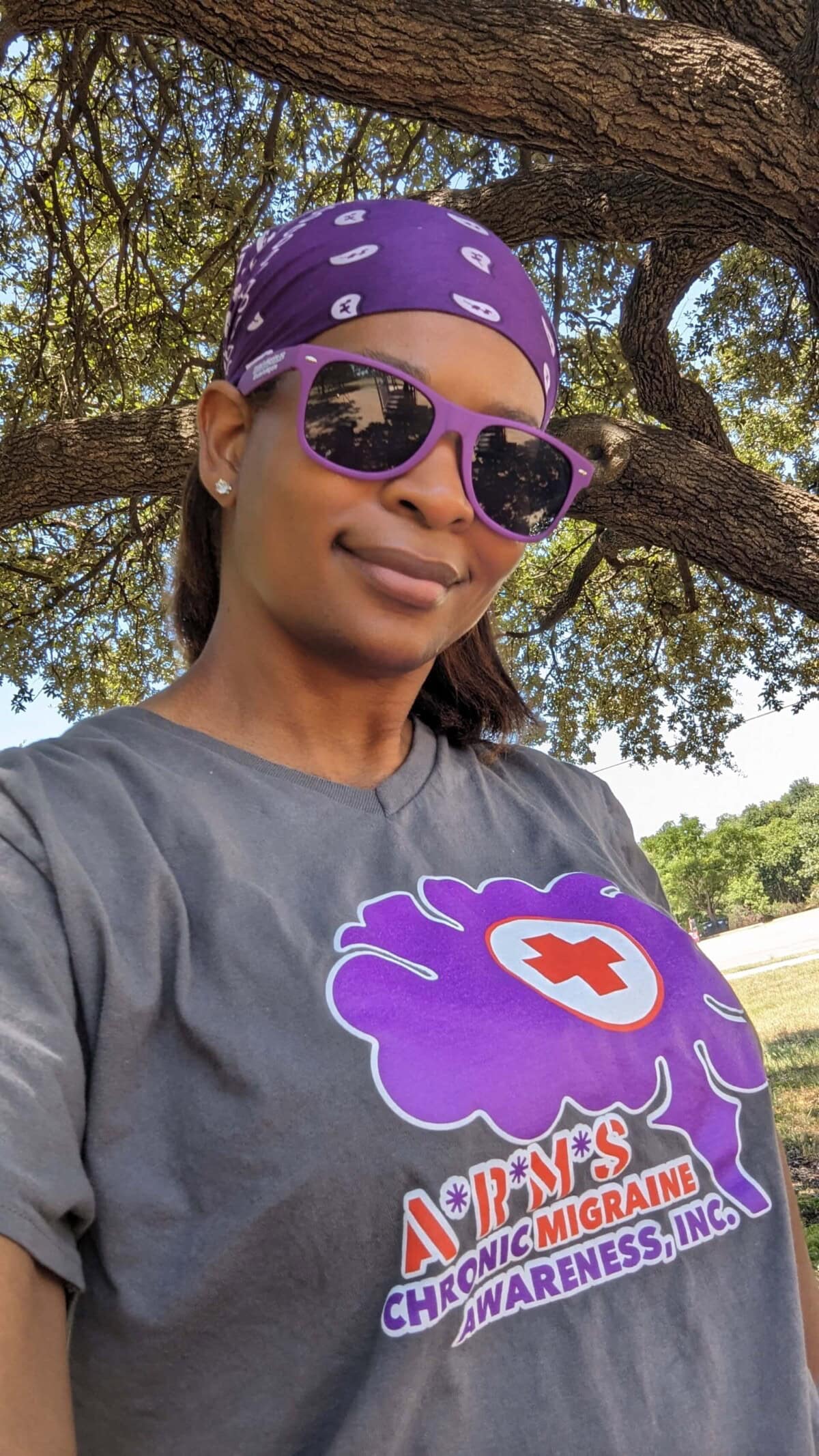
After she went off the opioid medications, her new HCP in Texas, officially diagnosed her with chronic intractable migraine with and without aura. “Back then [during my earlier diagnosis in 2001], … my attacks came with the aura, and I could not stand any light, any sound, any smells. I was nauseated; I would vomit sometimes.” In one especially bad instance in October 2024, her headache was so severe that she “could not function.”
When speaking of her ex-husband, she stated that he tried to help her to the best of his ability. “He tried everything. He gave me ice baths, [a foot bath], … he had an ice pack on my neck and my forehead. It was not working, so we had to go to the ER, [and in the] ER, I threw up.” At a 2016 educational event on headache and migraine, she was introduced to the idea of using cannabis** for managing headache symptoms. That event ultimately guided her to her current headache specialist, who administers yearly DHE infusions and prescribes other medications. She is also currently taking OTC products, triptans, CGRP inhibitors, and other non-headache-specific medications to help combat her pain.
Parenting with Migraine Disease
Elizabeth has found a unique support system in her family life. When her children were young, she taught them how to cook for themselves. Her first child knew how to operate the microwave, the stovetop, and the telephone. He even knew which medicine to give her. Elizabeth relies on her kids’ support when she cannot function.
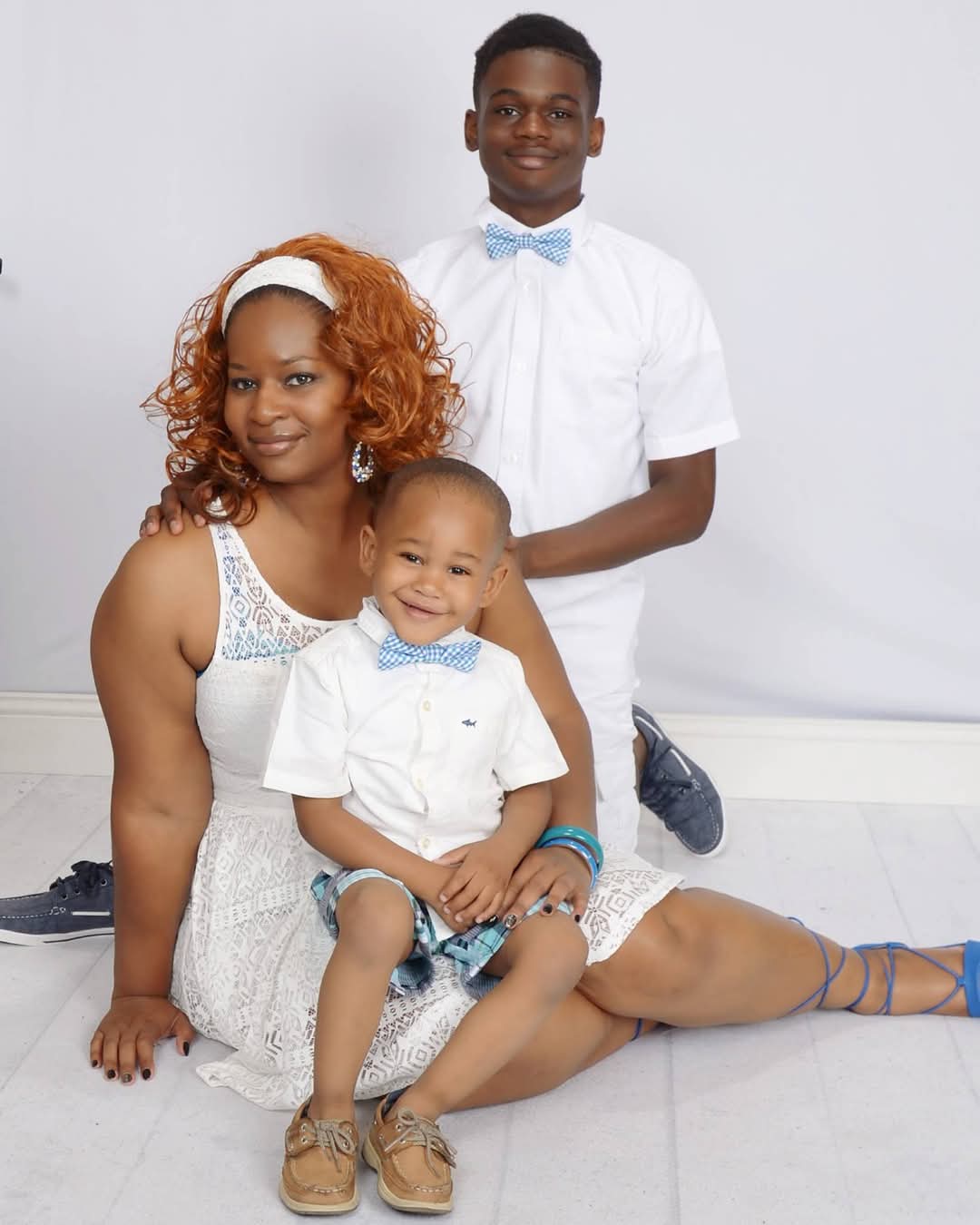
With her first child, she “went to his events with migraines.” She took a kit with her, which had all her essential items, including water and some medicine that didn’t make her feel tired. She would have to leave these events if the headache attacks were too painful. While her oldest does not have migraine, her second child does.
For Elizabeth, parenting a child who also has migraine disease is “kind of easy,” because she understands what he is going through. Her first child did not fully understand why she had to sit out of playtime. When her symptoms were especially bad, she would take her kids to playgrounds so they could interact with other children while she sat nearby and took a moment to rest.
Facing the Stigma
Elizabeth believes she has experienced discrimination because of her disability. In the past, not only did her friends and family not believe her pain, but it was also one of the reasons she struggled to find work. Elizabeth holds a PhD in healthcare administration, but she can’t find work in her field.

When applying for work in the past, she did not hear anything from those potential employers if she mentioned her migraine disease.
After speaking with a friend who also lives with migraine disease, Elizabeth decided to stop mentioning her condition in job applications.
She eventually found her current job, though outside of her field, and is now seeking a position that better aligns with her education.
Advocating for Others
Elizabeth relies on her children and the friends she has made through various headache organizations as her support network. She is actively involved in headache advocacy, and she wants to use her voice to help get rid of the stigma surrounding migraine disease. She is part of the National Headache Foundation’s Patient Leadership Council.
She encourages others to take control of their care, reminding them that “you are the boss of your doctors.” She helps others navigate their ongoing pain by educating them on how to avoid triggers and build support systems, always emphasizing to others to “never give up on finding relief.”
Her advice to others is to “Try everything. Do not stick to just one thing. If your [HCP] and their team don’t listen to your concerns and brush them off, look for another doctor.” She also advocates for “everyone with a headache disorder to have a headache specialist and a therapist who specializes in pain therapy.”
*Disclaimer: The use of opioids is not recommended for the treatment of headache disorders or migraine disease. Evidence suggests they may be ineffective and carry significant risks of medication overuse headache and dependance. (American Headache Society, 2019)
If you are experiencing headache or migraine attacks, consult a healthcare provider to work closely with a migraine specialist to develop a personalized treatment plan.
**Disclaimer: The use of cannabis is not currently approved by the U.S. Food and Drug Administration for the treatment of headache disorders or migraine disease. While emerging research and patient reports suggest a reduction in migraine frequency and reduced medication intake, the effectiveness and safety of cannabis for migraine management require further scientific investigation. Additionally, cannabis laws and accessibility vary significantly by state, and its use remains regulated under federal law. Individuals should consult with a healthcare provider and review local regulations before considering cannabis as a treatment option. (Practical Neurology, 2021)
"*" indicates required fields