
STRENGTH IN EVERY STORY™
Dannielle’s Story, September 2025
As told to: Katy Oakley
Diagnosis received: Migraine Headache
Symptoms: Sensitivity to light, sensitivity to sound, neck pain
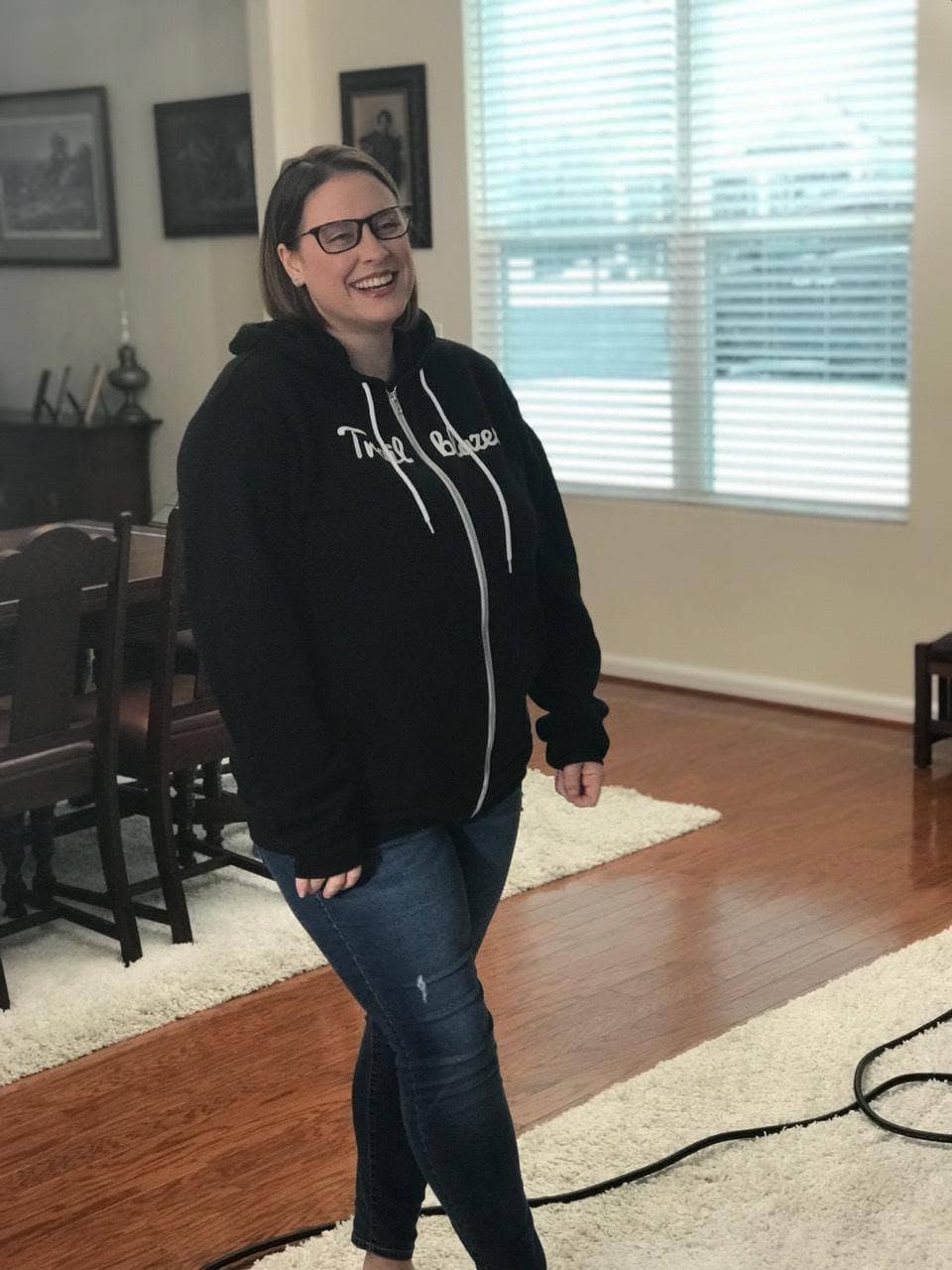
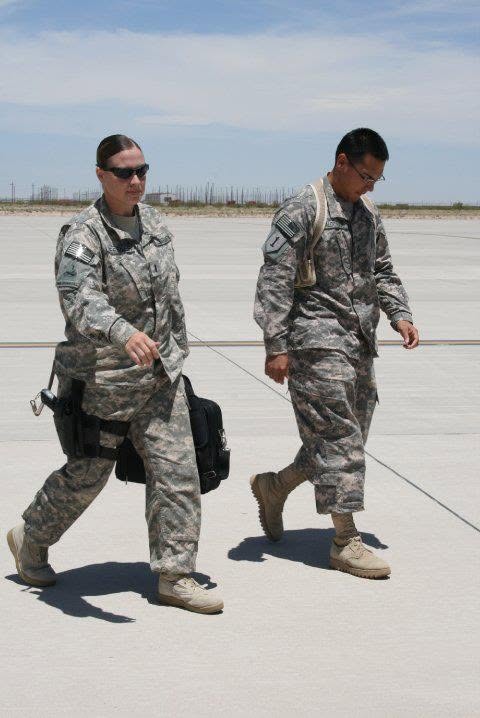
Veteran, Dannielle, served in the Army for seven years, including a 13-month combat deployment. She has lived with migraine for many years, including throughout her military service and civilian career.
Looking back at the start of her migraine journey, she describes her experience with migraine attacks and how they impact her life.
My first migraine actually happened while I was up at West Point, and I didn’t know what it was. It was the worst day of my life. I went to the doctor after a few tests. They started me on medication, but it seemed really haphazard at the time. I couldn’t predict when they would come on. It was really frustrating, and I just wasn’t getting the relief I needed. So that was my starting point…
A migraine, for me, starts at the base of my neck and works all the way up to the top of my head… I have light sensitivity and noise sensitivity. I don’t have the nausea, but my go-to was literally getting under the covers and making it as dark as possible, putting an eye cover on. Anything over a whisper, if I have a migraine, is just excruciating. It sounds like someone has air horns.
So, in the beginning, it was making it almost impossible to keep a consistent schedule, because I wasn’t yet able to predict when they were coming on. I also didn’t have medication that was effective at stopping them (the attacks) at the point I was recognizing them. It would disrupt my schedule by not being able to know if I [might] have a migraine today, [or] not knowing what caused it, things like that. It’s gotten a lot better, though.
For me personally, my journey as a veteran involved the VA a lot. It took advocating for myself, and it took, in a very calm and collected manner, saying when things were working or not working, and asking a lot of questions about my condition. I asked from the very beginning, ‘What is a migraine? What does this mean? Is this something that can be cured with surgery? Do I need medication?’
I went through multiple medications. Some worked really well, some not so much. I tried everything from pills to injections…and when something didn’t work, instead of just giving up, I went back and advocated for myself, and said, ‘these are the things that somewhat worked, and these are the things that didn’t work at all. This is something that was really impactful for me.’… by talking to my providers [and] understanding my symptoms better, I can better predict when they’re coming on [and] take my medicine [with] plenty of time…
Yes. So, I have a very specific story as a 24-year-old. [I was a] brand new lieutenant…I had been out [on] New Year’s Eve and woke up the next morning with a migraine. Not a hangover; it was a migraine. I went to the emergency room because I was out of my medicine, and I sat there for several hours, because the providers kept telling me that I was just hungover… And I finally told them, ‘All I need is this medication, which is not a narcotic, only used for migraines, not a painkiller.’
At that point, something in their mind clicked that this is clearly someone who has been around this. After that, I was able to get in. I was able to get right back [on my medication and], I had a conversation with a provider. Being able to give them information about my condition, tell them about what I had been through, providing them information saying, ‘I’m not here seeking drugs, I’m not hungover,’ was really helpful. From then on, I always make sure I have enough medication.
Having something I can rely on allows me to get out of the house, not have to really plan, being able to just be free, and not have this alternate plan. I know I have my medication; I trust myself enough to know when migraines are coming on. I have what I call my ‘rescue medication,’ and it just made the stress level a lot lower. I can fly, I can travel, I can drive, I can do any of that without any concern.
I wish that people knew that migraines are not ‘just a headache’. It can come in many different forms, and for me, they were completely debilitating. There was no sucking it up, or getting over it, I was unable to function with a full-blown, active migraine. So, I wish people understood that it’s just not a headache. It’s much, much more.
My advice would be to research migraines. Research your symptoms, and when you go to your doctor, take that research with you, and say, ‘I found this, these seem to be similar to the symptoms I’m having, I need help with this.’ Go to them with research on your own, be educated on it, understand what you’re feeling, keep track of things like how often you have them? Are there certain foods, are there things that trigger it? Be able to provide that to your doctor so that you can get the best possible outcome. The last thing to veterans: if you’re not getting the care that you’ve earned, call the Veterans Crisis Line. Talk to a patient advocate. Do something, but don’t just do nothing.


"*" indicates required fields